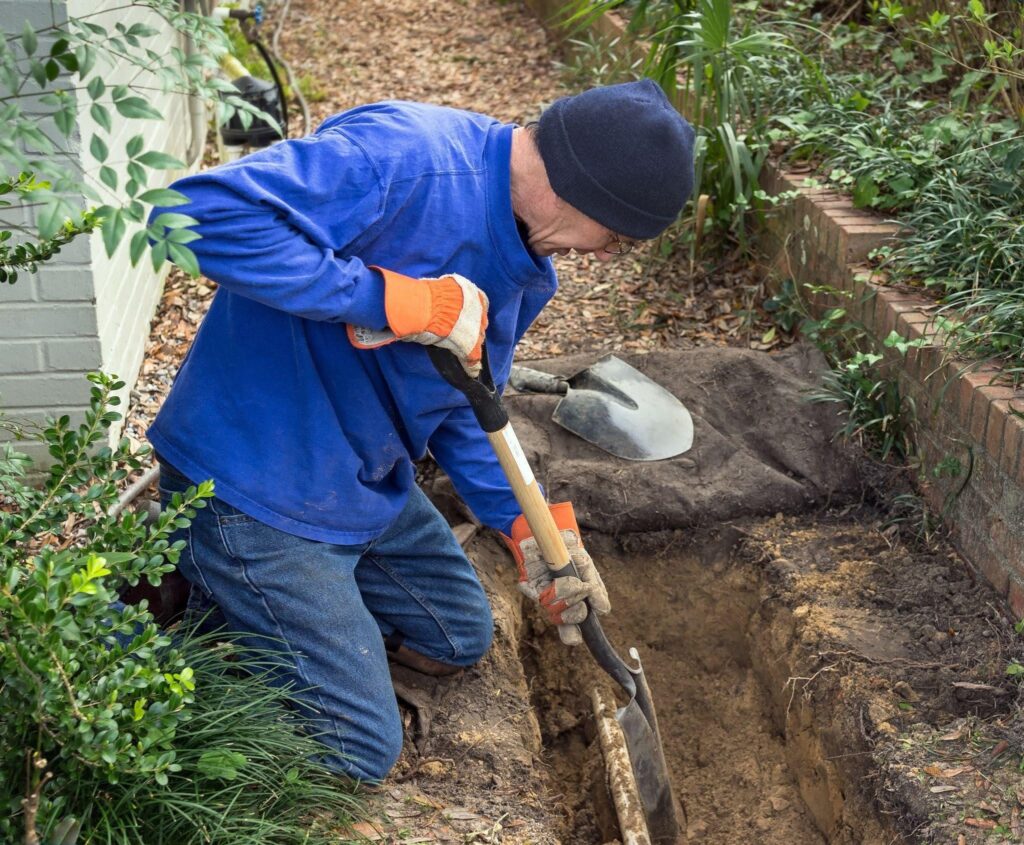
Tree roots in your sewer line may cause clogs, slow drains, backups, and pipe damage when they enter through small cracks or loose joints. The best way to handle the problem is early diagnosis, professional cleaning, and repair of the damaged section, so roots don’t keep coming back.
Plumbing problems often start quietly, but root intrusion can quickly turn a small issue into a major mess. A few roots inside a sewer line can trap waste, block drainage, and damage the pipe over time. It’s common to miss this problem until you notice repeated clogs or bad odors that start affecting daily life.
In this guide, you’ll learn how tree roots in your sewer line get there, what warning signs to watch for, how plumbers fix the issue, and why timely cleaning and repair matter when you want to protect your home.
Tree roots in your sewer line develop when roots search for moisture, find a weak spot in the pipe, and begin growing inside it. Even a tiny crack, loose joint, or damaged connection will release enough water vapor to attract roots in the surrounding soil. Once roots enter the pipe, they continue growing because the pipe's interior provides steady moisture and nutrients.
At first, the intrusion may be small. Thin roots enter through a narrow opening and begin catching debris like toilet paper, grease, soap residue, and waste. As roots thicken, they restrict flow and cause recurring drainage problems. Over time, they may force joints apart, widen existing cracks, or damage more of the line itself.
This is why the problem goes far beyond a basic clog. A routine fixture blockage may affect a single sink or toilet. Root intrusion often affects multiple drains, causes backups in unexpected places, and points to deeper trouble underground.
In many cases, you need professional sewer line cleaning, followed by trenchless sewer line repair or replacement of the damaged section to prevent the problem from returning.
If roots may be affecting your plumbing, the best approach is to act early. The longer the roots stay inside the pipe, the more they grow, trap debris, and increase the chance of major damage.
Common warning signs include repeated clogs, several slow drains at once, gurgling toilets, sewage odors, and wastewater backing up into tubs or floor drains. These problems often suggest a deeper issue in the main sewer line rather than an isolated clog.
Plungers and basic drain cleaners may create short-term relief, but they don’t solve root intrusion. Harsh chemical cleaners may also damage older pipes and do little to fix the real problem.
A camera inspection gives plumbers a clear look inside the pipe. It helps confirm whether tree roots in your sewer line are causing the blockage and shows how severe the intrusion has become.
Once the problem is confirmed, a plumber may recommend cleaning the line using root-cutting, hydrojetting, or both. The right method depends on the pipe condition, the type of blockage, and the extent of root growth within the line.
Cleaning the roots restores flow, but it doesn’t fix the crack or weak joint that let them in. If the line is damaged, the plumber may recommend spot repair, relining, or partial replacement.
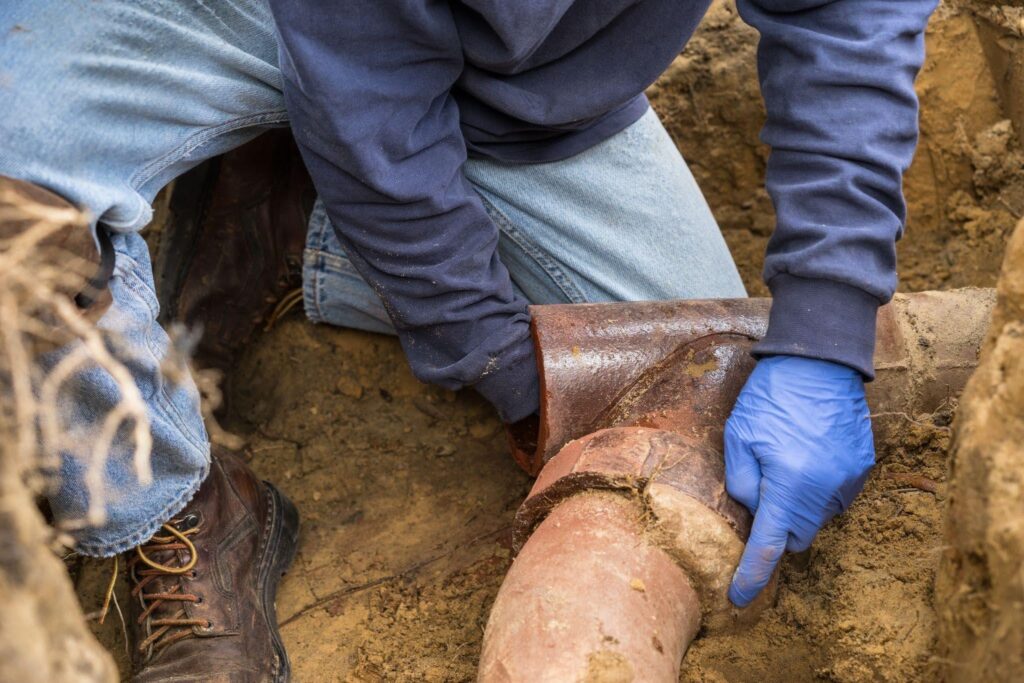
When roots invade a sewer pipe, early action protects your plumbing and home.
A damaged line rarely improves on its own. Once roots enter the pipe, they keep growing until something forces the issue.
Here are a few useful takeaways homeowners should keep in mind:
Homeowners can watch for warning signs, but root intrusion usually requires professional help.
When plumbers confirm tree roots in your sewer line, they usually start by locating the problem with a camera. Then they clear the roots with root cutting or hydrojetting and determine whether the line needs trenchless sewer line repair to prevent the issue from recurring.
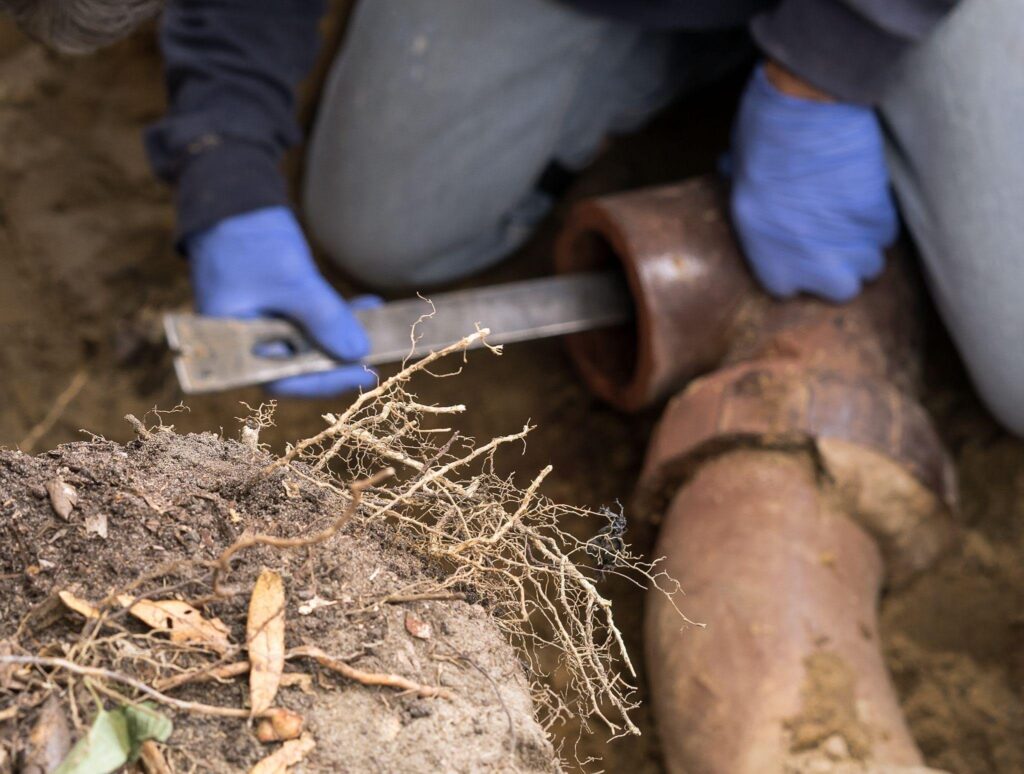
Roots make their way in through small cracks, damaged joints, or weak pipe connections. Once they detect moisture escaping into the soil, they grow toward the opening and spread inside the pipe.
Schedule a sewer camera inspection as soon as possible. This helps confirm whether tree roots are causing the issue and allows a plumber to recommend the right cleaning or repair solution.
Yes, professional cleaning can remove roots in many cases through root cutting, hydro jetting, or a combination of both. However, the pipe may still need repair if the roots have entered through damaged sections.
They may. If the crack or loose joint remains open, roots can return after cleaning. That is why plumbers often recommend repairing the damaged area after clearing the blockage.
A plumber usually inspects the line with a camera, clears the roots, and then repairs or replaces the damaged section of pipe. The exact fix depends on the condition of the line and the severity of the intrusion.
Tree roots inside a damaged sewer pipe rarely go away on their own. If you’re dealing with repeated clogs, slow drains, sewage odors, or signs of a deeper problem, it’s important to have the issue checked before it causes more damage.
Neighborly Plumbing provides trusted solutions for homeowners dealing with tree roots in their sewer line, recurring backups, and underground pipe issues. From sewer camera inspections to professional sewer line cleaning and targeted repairs, our team is ready to help you find the cause of the problem and fix it the right way.
Contact Neighborly Plumbing today for expert service and dependable solutions that help protect your home and restore proper flow.